


The best living room false ceiling designs depend on two things: your room size and your ceiling height. Small rooms suit simple single-layer or border designs. Large rooms can handle tray, layered, and wooden accent designs. This guide helps you pick the right one for a False ceiling residential in Jaipur and explains materials, lighting, and cost in simple terms.
A living room false ceiling does more than look nice. It hides wires, holds your lights, and changes how big the room feels. A well-planned residential false ceiling is also easy to clean and maintain. If you are looking for a false ceiling design for your home, check your ceiling height before you fall in love with a photo. Many homeowners search for a false ceiling in Jaipur when they want false ceiling designs and installation services.
What Is a False Ceiling and Why Add One to a Living Room?
A false ceiling is a second ceiling hung below your main concrete slab. It is also called a dropped or suspended ceiling. The installation method depends on the material. Gypsum boards are generally fixed to a metal framework, while POP, PVC, and wooden ceilings use different application or support systems. The finished surface may be painted, textured or fitted with decorative elements.
In a living room, it does four useful jobs:
- Hides wires, AC pipes and uneven slab surfaces
- Gives a place for cove lights, spotlights and a chandelier
- Adds shape and style to a plain flat ceiling
- Helps define the seating area in a bigger hall
There is one trade-off. The frame takes some height from the room. That is why the design you pick should match your ceiling height, not just your taste.
Materials Compared: Gypsum, POP, PVC and Wood
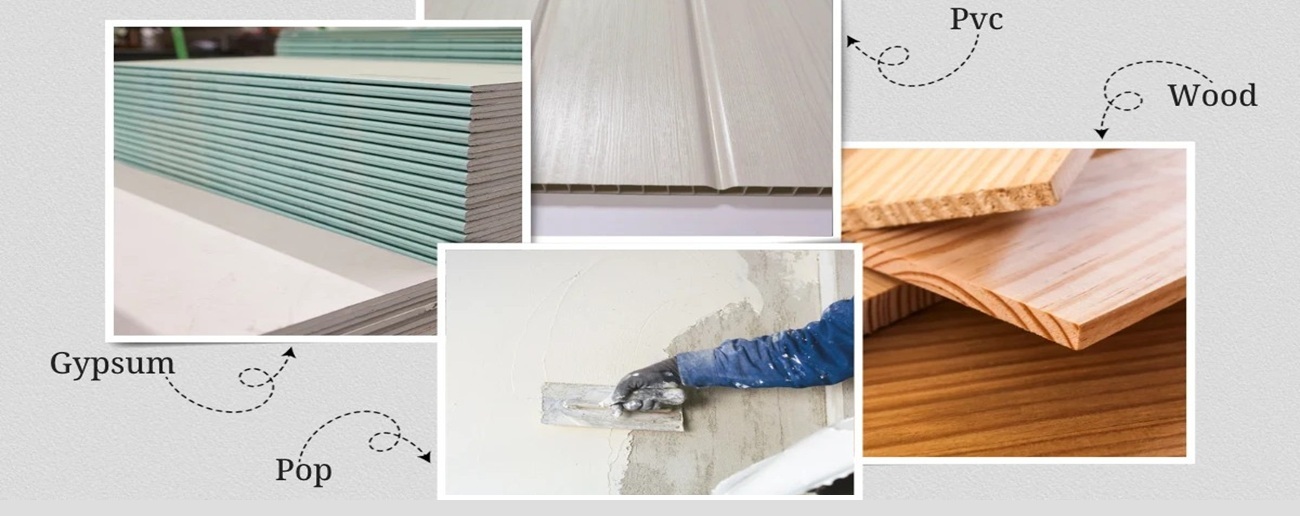
The material decides how your ceiling looks, how long it lasts and how much care it needs. Here is a simple comparison for living rooms.
| Material | Look and feel | Best for | Keep in mind |
| Gypsum board | Smooth, clean, ready to paint | Most living rooms, flat and layered designs | Joints need neat finishing. Standard boards do not suit constant damp, so match the board type to the room. |
| POP (Plaster of Paris) | Sculpted patterns, curves and borders | Detailed or traditional designs | Needs skilled hands. Poor work can crack at joints. |
| PVC panels | Generally moisture resistant, easy to wipe | Spots with occasional dampness, like near a balcony door | Not a fix for active leaks. Fewer shape options. |
| Wood | Warm and premium | Accent panels and beams | Costs more and needs protection from moisture |
Gypsum board is a popular choice for living rooms because it gives a smooth finish and suits both simple and layered designs. Just make sure the board type and installation match the room’s moisture level. Many people use gypsum for the main ceiling and add a small wooden or POP detail where they want to stand out. A mix often looks better than one material everywhere.
Room Size and Ceiling Height: Start Here
Most people look only at floor area. But floor area and ceiling height are two different things, and you need to check both.
- Small room, low ceiling: Keep the design thin. A border style or a single flat layer works best. Light colors help the ceiling feel higher.
- Small room, high ceiling: You have room to play. One simple step or a soft cove light looks good without crowding the room.
- Large room, low ceiling: Avoid deep layers. Use a slim design with hidden lights so the room does not feel heavy.
- Large room, high ceiling: This is where tray, layered, and coffered designs shine.
Measure from the floor to the slab. Then ask your contractor how much the frame will drop. Also remember that a fan and an AC need clear space under the ceiling, so leave some margin.
False Ceiling Designs for Small Living Rooms
In a small living room, less is more. The goal is to add style without making the room feel closed in. These designs work well:
- Single-layer flat ceiling. One clean surface with a few spotlights. It is simple, neat, and easy to maintain.
- Peripheral (border) ceiling. The false ceiling runs only along the edges, and the center stays open. A thin strip of cove light along the border adds depth.
- Minimal line design. One or two straight lines or a slim step, painted in the same color as the walls.
- Light colors. White, off-white or soft beige make the ceiling look higher.
For example, in a living room of about 10 by 12 feet with a low slab, a slim border with warm cove lights looks better than a heavy center design. A big chandelier in such a room will only make it feel smaller.
Keep one rule in mind. If you can notice the ceiling before you notice the room, it is probably too much.
False Ceiling Designs for Large Living Rooms
A big living room has more space, so the ceiling can do more. The risk here is the opposite: a large flat ceiling can feel empty and dull.
- Tray ceiling. The center is raised or dropped inside a frame. It gives a clear focal point, and it suits a room with a sofa set in the middle.
- Layered ceiling. Two or three levels at different heights. Hide LED strips in the steps for a soft glow.
- Coffered ceiling. A grid of recessed boxes. It gives a classic, rich look, but needs good height.
- Wooden accents. A few wooden panels or beams inside a gypsum ceiling add warmth without making the whole ceiling heavy.
- Geometric patterns. Straight lines, squares, or circles that follow the room’s shape. They look modern and tidy.
If your living room and dining area share one hall, use the ceiling to split the two. A different shape or level above each zone makes the space feel planned, not just big. Place the chandelier or pendant light above the seating area so it becomes the center of the room.
Lighting, Fan and AC Planning
Lighting can make a simple ceiling look rich, and a bad light plan can spoil a good design. Plan it before the frame goes up, not after.
- Cove lighting. LED strips hidden in a step or edge. They give soft, even light and are great for evenings.
- Spotlights. Small recessed lights for reading corners, artwork or the TV wall. Do not fill the whole ceiling with them. Place them where you need light.
- Layers of light. Mix cove lights for mood, spotlights for focus and a table or floor lamp for tasks.
- Warm white tone. For a living room, warm white light (around 2700K to 3000K) feels cozy. Very cool white light can feel like an office.
A few safety points matter just as much:
- Fix the ceiling fan to the main slab or a proper structural support, not only to the false ceiling boards.
- Plan AC vents and pipes early so they do not clash with the design.
- Keep an access panel or an easy way to reach wiring and drivers for future repairs.
- Plan the lighting circuits and the total electrical load before work starts.
- Get the wiring done by a qualified electrician.
Jaipur Climate, Dust and Maintenance
Jaipur has hot, dry summers, a monsoon season, and a lot of dust. All three affect your ceiling choice. When selecting a false ceiling design for home, consider not just its appearance but also the local climate and maintenance requirements.
One common myth first. A false ceiling does not cool a room on its own. Heat mostly comes through the roof, so roof insulation, ventilation, and your AC matter more. A false ceiling may add to thermal comfort when it is planned with suitable insulation and a proper air gap, but the result depends on your roof structure and the building as a whole.
Here is what to plan for:
- Dust: Pick smooth, simple surfaces. Deep grooves and many small steps collect dust. A dry cloth or soft duster is usually enough for cleaning.
- Monsoon damp: If your slab or an AC pipe leaks, fix that first. Gypsum and wood do not like moisture, and stains will show up on the ceiling.
- Yearly check: Look at joints, paint, and light fittings once a year. Small cracks are easy to repair early.
If you notice water stains, sagging, or cracks that keep coming back, find the source of moisture before you repair or repaint. A well-finished ceiling from a careful installer should need very little care in normal use.
Cost in Jaipur: What Affects the Price?
Two living rooms of the same size can have very different costs. Rates also change with the market, so a fixed number from a blog can mislead you. It is better to know what moves the price:
- Material and thickness. Gypsum, POP, PVC, and wood all cost differently, and so do boards of different quality.
- Design complexity. A flat ceiling costs less than a three-layer ceiling with curves.
- Total area. You pay for the area covered, not just the room size.
- Lighting and electrical work. Cove lights, drivers, wiring, and fittings add to the bill.
- Finishing. Putty, paint, and any wooden or decorative detail.
- Site conditions. Ceiling height, access, and any repair needed on the slab.
Ask for an itemized quote, so you can see what you pay for each part. A good contractor will visit your home before quoting, because the real measurements and the plan decide the price.
How to Choose the Right False Ceiling for Your Home
Use this quick checklist before you finalize anything:
- Measure your ceiling height and room size.
- Decide your budget, including lights and paint.
- Pick a style that matches your furniture and wall colors.
- Choose a material that fits the room’s moisture level.
- Plan where the fan, AC and lights will go.
- Ask how you will reach the wiring later.
- Check the contractor’s earlier residential work and ask for a site visit.
If you are stuck between two designs, choose the simpler one. A clean ceiling with good lighting almost always looks better than a busy one.
Common False Ceiling Mistakes to Avoid
These are the mistakes that show up again and again in home projects:
- Overdesigning a small room. Too many layers and lights make it feel tight.
- Ignoring ceiling height. A deep design in a low room feels heavy.
- Hanging the fan on the boards. Check the lighting section for the safe way.
- Choosing lights by looks only. The wrong brightness or color tone ruins the mood.
- Skipping the leak repair. Covering a damp slab only hides the problem for a while.
- No access to wiring. Even a small hidden panel saves a lot of trouble later.
- Picking a design from a photo alone. A picture does not show your room’s height, light or furniture.
Conclusion
The right false ceiling starts with your room, not a photo. Check your ceiling height and room size, pick a material that suits the space, plan your lights early and keep the design simple. Do this and your living room will look better and stay easy to care for.
If you are planning a residential false ceiling in Jaipur, VR Gypsum and Sound Solutions in Malviya Nagar offers false ceiling installation, including gypsum and POP ceilings, designer ceilings and LED cove lighting. The team visits the site and discusses suitable options before giving a quote, so you get advice that fits your room.
Frequently Asked Questions
Q.1 Which false ceiling is best for a small living room?
A single layer gypsum ceiling or a slim border design is best. Add soft cove lights and keep the color light. This keeps the room open and does not cut much height.
Q.2 Does a false ceiling make a room look smaller?
It can, if the design is too deep or too heavy for the room. A slim design with light colors and hidden lights usually keeps the room feeling open.
Q.3 Which material is best for a living room ceiling?
Gypsum board suits most living rooms because it gives a smooth finish and works with many designs. Use PVC where occasional dampness is a concern, but fix any leak first. Add wood or POP only as accents.
Q.4 What decides the cost of a false ceiling?
Material, design complexity, area, lighting, finishing and site conditions. Since each home is different, ask for an itemized quote after a site visit.
Q.5 How do I maintain a false ceiling?
Dust it lightly with a dry cloth, fix any roof or pipe leaks quickly and check joints and fittings once a year.
